Pair Lips, Cheeks and Eyes
A makeup look feels awkward not because any single product is poor, but because the cheek and lip pigments are fighting an unspoken war over temperature, saturation, and contrast values.
Temperature Discipline: The Anchor Rule
The human eye detects temperature discrepancies across the facial triangle almost immediately. When you wear a cool blue-toned plum lip paired with an orange-bronze terracotta blush, your brain registers the clash as facial unevenness or poor blending.
Harmonious color composition does not mean you must wear only one shade. Rather, it means choosing whether your overall statement is warm-dominant, cool-dominant, or a deliberate grounded neutral.
If you choose to wear a statement red lip, analyze its core undertone first. An orange-brick red requires warm peach or soft bronze blush. A cool ruby-crimson demands a muted rose or plum veil on the cheeks.
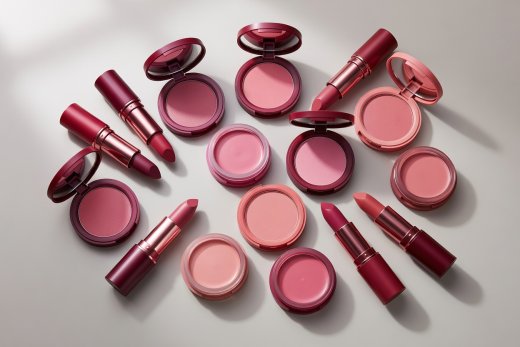
Curated Pairing Blueprints for Varied Complexions
Earth & Amber
Blush: Muted spiced cinnamon or warm baked apricot.
Lipstick: Semi-matte terracotta or caramel brown.
Eyeshadow: Matte fawn transition with metallic copper accent.
Ideal For: Warm golden, olive, and deep bronze undertones looking for radiant everyday warmth.
Petal & Wine
Blush: Dusty mauve or cool berry stain.
Lipstick: Deep blackberry or muted rose-taupe.
Eyeshadow: Slate grey, cool taupe, and icy oyster shimmer.
Ideal For: Fair to rich cool complexions seeking refined contrast without brassy tones.
Champagne & Nude
Blush: Neutral rosewood or soft peach-buff.
Lipstick: Nude-pink satin with neutral brown liner.
Eyeshadow: Sandstone wash with micro-fine champagne reflection.
Ideal For: Balanced neutral complexions and professional environments wanting subtle definition.
Constructing an Eyeshadow Palette That Works
Rather than buying 18-pan palettes filled with novelty shades that never get touched, master the classic three-tone structural method.
The Base/Transition Pan
This is a completely matte pigment selected to be 1 to 2 shades deeper than your eyelids. When swept across the orbital bone crease with a tapered blending brush, it establishes depth and creates a seamless bridge between your foundation and the eyelid pigment.
The Sculpting Anchor
A deep satin or matte tone—such as espresso brown, deep plum, forest green, or charcoal. Placed in the outer "V" corner and blended tightly along the lash line, it frames your iris and gives structural dimension to your eyes.
The Optical Light Catch
A micro-shimmer, pearl, or soft metallic pigment pressed onto the mobile center of your eyelid and the inner tear duct. When environmental light hits your moving eyelids, this contrast makes your eyes look vibrant, alert, and open.